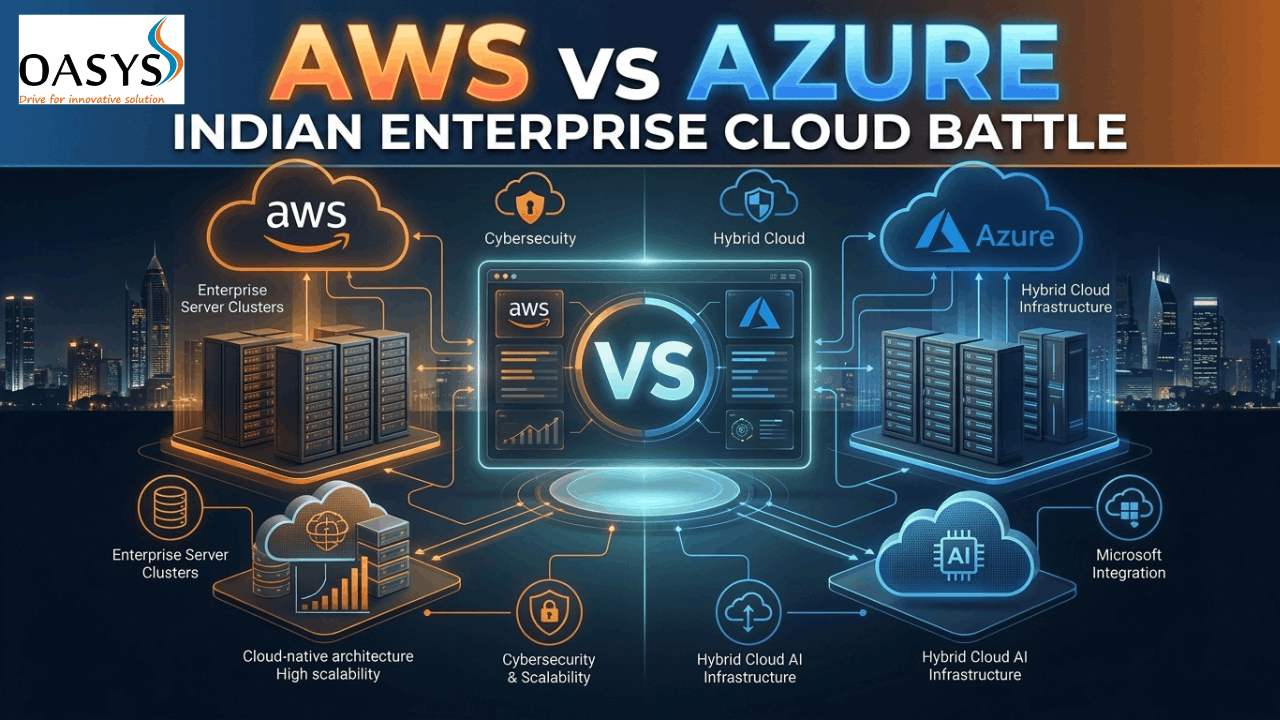
Choosing between Amazon Web Services and Microsoft Azure is no longer just a technical decision. For Indian enterprises, it affects infrastructure costs, scalability, security, compliance, and even how fast internal teams can operate.
Most comparison articles reduce the discussion to feature lists and pricing charts. That sounds useful until a CTO realizes the real problem starts after deployment. Cloud adoption failures rarely happen because a platform lacked features. They happen because the platform did not align with the company’s operational ecosystem, team expertise, or long-term business goals. People love buying “best” software before understanding their own processes. Ancient tradition at this point.
For enterprises hosting critical applications in India, the better cloud platform depends on workload type, existing infrastructure, compliance requirements, and growth strategy. This guide breaks down the practical differences between AWS and Azure from an enterprise perspective.
Why Cloud Platform Selection Has Become a Strategic Enterprise Decision
Enterprise applications today support everything from ERP systems and customer portals to AI workloads and business analytics. Downtime, latency, or poor scalability directly impact revenue and operations.
That is why cloud infrastructure decisions now involve:
For Indian enterprises, there is another layer: local compliance expectations and the need for reliable regional infrastructure support. A cloud platform is not simply hosting anymore. It becomes part of the company’s operating model.
Understanding AWS and Azure in the Enterprise Cloud Ecosystem
What is AWS?
AWS is the cloud computing platform offered by Amazon. It dominates the global cloud market and provides one of the largest collections of cloud infrastructure services available today.
AWS is widely preferred for:
- Large-scale application hosting
- SaaS platforms
- High-performance workloads
- Advanced developer ecosystems
- Cloud-native environments
Its strength lies in flexibility and scale. Enterprises needing granular infrastructure control often lean toward AWS.
What Is Microsoft Azure ?
Azure is Microsoft’s enterprise cloud platform built around deep integration with the Microsoft ecosystem.
It is commonly used by enterprises already relying on:
- Windows Server
- Active Directory
- Microsoft 365
- SQL Server
- Enterprise Microsoft licensing
Azure has positioned itself strongly in hybrid cloud infrastructure, making it attractive for enterprises transitioning gradually from on-premise environments.
AWS vs Azure: Core Differences Enterprise Buyers Must Understand
| Factor | AWS | Azure |
|---|---|---|
| Market Maturity | Larger global cloud ecosystem | Strong enterprise ecosystem |
| Hybrid Cloud | Strong but complex | Excellent hybrid integration |
| Microsoft Integration | Limited native alignment | Deep Microsoft compatibility |
| Learning Curve | Steeper | Easier for Microsoft-based teams |
| AI & ML Services | Highly mature | Strong enterprise AI tooling |
| Pricing Structure | Flexible but complex | Easier enterprise licensing alignment |
Global Infrastructure and Indian Data Center Presence
Both AWS and Azure maintain data center regions in India, helping enterprises reduce latency and improve compliance readiness. AWS currently has a strong global infrastructure advantage with extensive availability zones and mature networking capabilities.
Azure, however, performs particularly well for enterprises already operating Microsoft-heavy environments because connectivity and integration become operationally simpler. For Indian enterprises running hybrid infrastructure, Azure often reduces friction during migration.
Pricing Structure and Long-Term Cost Predictability
Cloud pricing discussions usually become misleading because people compare only compute costs. Real enterprise cloud costs include:
- Storage
- Data transfer
- Monitoring
- Backup
- Licensing
- Scaling overhead
- Reserved capacity planning
AWS offers flexibility but can become expensive if infrastructure is poorly optimized. Azure often provides cost advantages for enterprises already paying for Microsoft enterprise licenses through hybrid benefit programs.
A practical observation:
- AWS works well for cloud-native scaling
- Azure works well for enterprises deeply invested in Microsoft ecosystems
- Neither platform is “cheap.” The cheaper option depends on operational alignment.
Scalability for Enterprise Workloads
AWS has historically led the market in scalability and cloud-native infrastructure maturity. Enterprises running:
- High-traffic SaaS products
- AI applications
- Big data workloads
- Large distributed systems often prefer AWS because of its infrastructure depth.
Azure has improved significantly in scalability and performs strongly for:
- Enterprise applications
- ERP systems
- Internal business platforms
- Hybrid enterprise workloads
For most Indian enterprises, scalability is no longer the deciding factor. Operational efficiency usually matters more.
Hybrid Cloud and On-Premise Integration
This is where Azure has a major advantage. Many Indian enterprises still operate partially on-premise due to compliance, cost, or legacy infrastructure reasons. Azure’s integration with existing Microsoft enterprise environments makes hybrid deployment smoother.
AWS supports hybrid architecture too, but Azure generally provides:
- Better native Windows integration
- Easier Active Directory synchronization
- Simpler enterprise identity management
If an enterprise is heavily dependent on Microsoft technologies, Azure often reduces migration complexity and training overhead.
Security, Compliance, and Governance
Both AWS and Azure provide enterprise-grade security capabilities.
Key areas both platforms support:
- Identity and access management
- Encryption
- Compliance certifications
- Threat monitoring
- Disaster recovery
- Governance frameworks
The real difference is operational implementation. AWS provides deeper customization capabilities but often requires stronger cloud expertise. Azure simplifies governance for Microsoft-based organizations because security policies integrate more naturally into existing enterprise environments.
For regulated sectors like finance, healthcare, and enterprise SaaS, governance maturity matters more than marketing claims about “most secure cloud.” Every vendor claims that. Humanity apparently believes security can be solved through homepage banners.
Which Platform Fits Different Enterprise Environments ?
When AWS Makes More Sense
AWS is usually the better choice when:
- Building cloud-native applications
- Running global-scale SaaS infrastructure
- Deploying advanced AI workloads
- Managing container-heavy environments
- Needing advanced infrastructure customization
It is particularly strong for tech-first organizations with experienced DevOps teams.
When Azure Is the Better Choice
Azure becomes a strong fit when :
- The enterprise already uses Microsoft technologies
- Hybrid cloud deployment is important
- Internal IT teams are Windows-focused
- Identity management simplicity matters
- Enterprise licensing optimization is a priority
- For traditional enterprises modernizing infrastructure gradually, Azure often creates less operational disruption.
Hidden Challenges Enterprises Often Ignore
Before selecting a cloud platform, enterprises should evaluate risks that rarely appear in comparison articles.
Vendor Lock-In
Moving workloads between cloud providers later can become expensive and technically painful.
Unexpected Cost Escalation
Cloud costs grow rapidly without governance policies and monitoring.
Skills Availability
AWS specialists are highly available in the market, but Azure talent is growing quickly due to enterprise adoption.
Migration Downtime
Poor migration planning can affect operations, especially for customer-facing applications.
A successful cloud strategy depends less on platform marketing and more on internal operational readiness.
A Practical Decision Framework for Indian CTOs
Choose AWS if your organization:
- Prioritizes scalability and cloud-native architecture
- Operates global SaaS applications
- Requires advanced infrastructure flexibility
- Has experienced DevOps teams
Choose Azure if your organization:
- Relies heavily on Microsoft infrastructure
- Needs strong hybrid cloud support
- Wants easier enterprise integration
- Prioritizes operational simplicity
The best cloud platform is usually the one that aligns with your enterprise ecosystem, not the one with the longest feature list.
Final Recommendation: AWS or Azure for Enterprise Applications in India?
There is no universal winner in the AWS vs Azure debate. For cloud-native enterprises focused on scalability, customization, and advanced infrastructure control, AWS often provides greater flexibility.
For enterprises operating within Microsoft ecosystems or transitioning gradually into cloud infrastructure, Azure frequently delivers smoother integration and operational efficiency.
Indian enterprises should evaluate:
- Existing infrastructure
- Team expertise
- Compliance requirements
- Long-term scaling plans
- Total operational cost before making a decision.
The enterprise cloud decisions are approached strategically rather than through generic platform recommendations. The right cloud infrastructure should support operational growth, cost efficiency, security, and long-term business scalability without creating unnecessary complexity later. Because rebuilding cloud architecture after a rushed decision is the kind of expensive lesson enterprises remember for years.